
How to Check Criminal History in Lee County
Begin with the event or outcome being checked. The Lee County Sheriff's Citizen Connect system is best for recent sheriff incidents, arrests and jail confinements. A filed felony belongs to the Superior Court clerk, not the jail. A statewide felony-conviction question belongs with the Georgia Bureau of Investigation, while a fingerprint-supported review of one's own record requires the official GCIC process. No one search combines all of those layers.
Collect a full name, spelling variants, approximate event date and any incident, booking or case number before searching. A date of birth can help separate names, but only fingerprints confirm identity. Follow the record from its source to its outcome:
- Check Citizen Connect for a recent incident, arrest or confinement.
- Use a narrow date range and both coded and spelled-out agency choices when available.
- Ask the Superior Court clerk whether a criminal case was filed.
- Read the disposition for each charge rather than treating an arrest as the result.
- Request a certified court copy or personal GCIC record when formal proof is needed.
Lee County Citizen Connect Searches
The sheriff's portal separates Incident Search, Arrest Search, Inmate Confinements and a Daily Report. That design matters. An incident entry describes an event reported to the sheriff. An arrest entry reflects an allegation and custody action. A confinement entry tracks jail administration. The Daily Report ties several modules together and also includes accidents, bookings, most wanted and missing-person tabs.
The official Citizen Connect landing screen shows those modules before a person is selected.
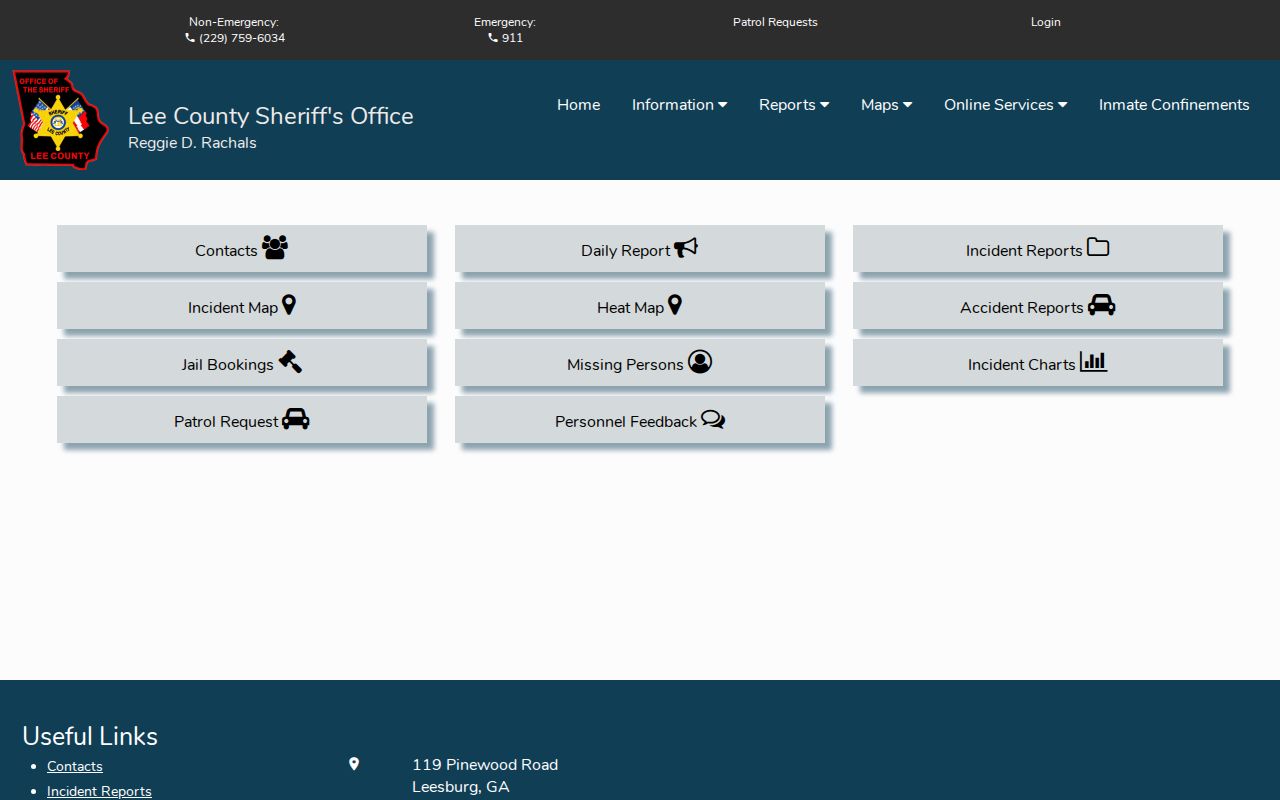
Use the module that matches the question, and allow for the portal's stated delay of up to 72 hours for incident and accident reports.
| Portal | Useful inputs | Main limit |
|---|---|---|
| Incident Search | Incident number, date range, name, or location and radius | The public result may omit narratives and attachments |
| Arrest Search | Arrest date range and agency | An arrest is not a conviction |
| Inmate Confinements | Current or admission-date mode, up to 31 days | Transfer or release changes status quickly |
| Daily Report | Date and record-type tab | Not a complete warrant index |
Official Georgia Background Checks
The Georgia Bureau of Investigation's Georgia Crime Information Center maintains the central criminal-history repository. Georgia Felon Search is its public, name-based product for possible Georgia felony-conviction matches. It asks for first and last name, date of birth, sex and a credit card. The result is not a complete rap sheet: misdemeanors, juvenile matters and restricted information are outside its stated scope, and a name match is not fingerprint confirmation.
The official entry screen displays the search scope and access path.
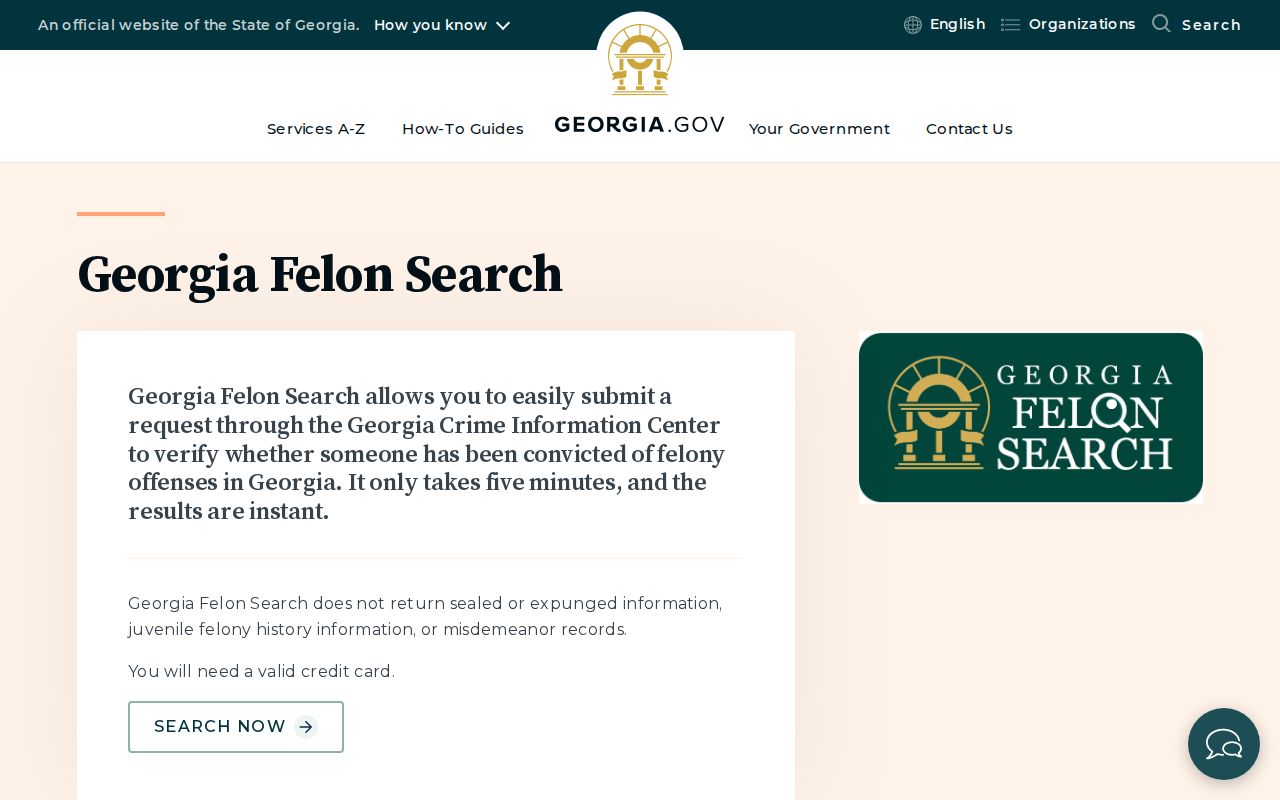
Confirm the live transaction price on the payment screen. For a broader Georgia copy, follow GCIC rules through an authorized local law-enforcement agency. For identity disputes or personal record challenges, fingerprints are the reliable route.
Lee County Fingerprint Record Review
The Georgia Applicant Processing Service, operated through IdentoGO and IDEMIA, captures fingerprints for authorized Georgia checks. Registration begins with an agency or personal-request service code, followed by an appointment and valid photo identification. GCIC says agency results normally become available within 24 to 48 hours after prints are submitted. The service code controls the purpose and recipient, so it should come from the agency requiring the check.
GAPS provides the official appointment and registration interface.
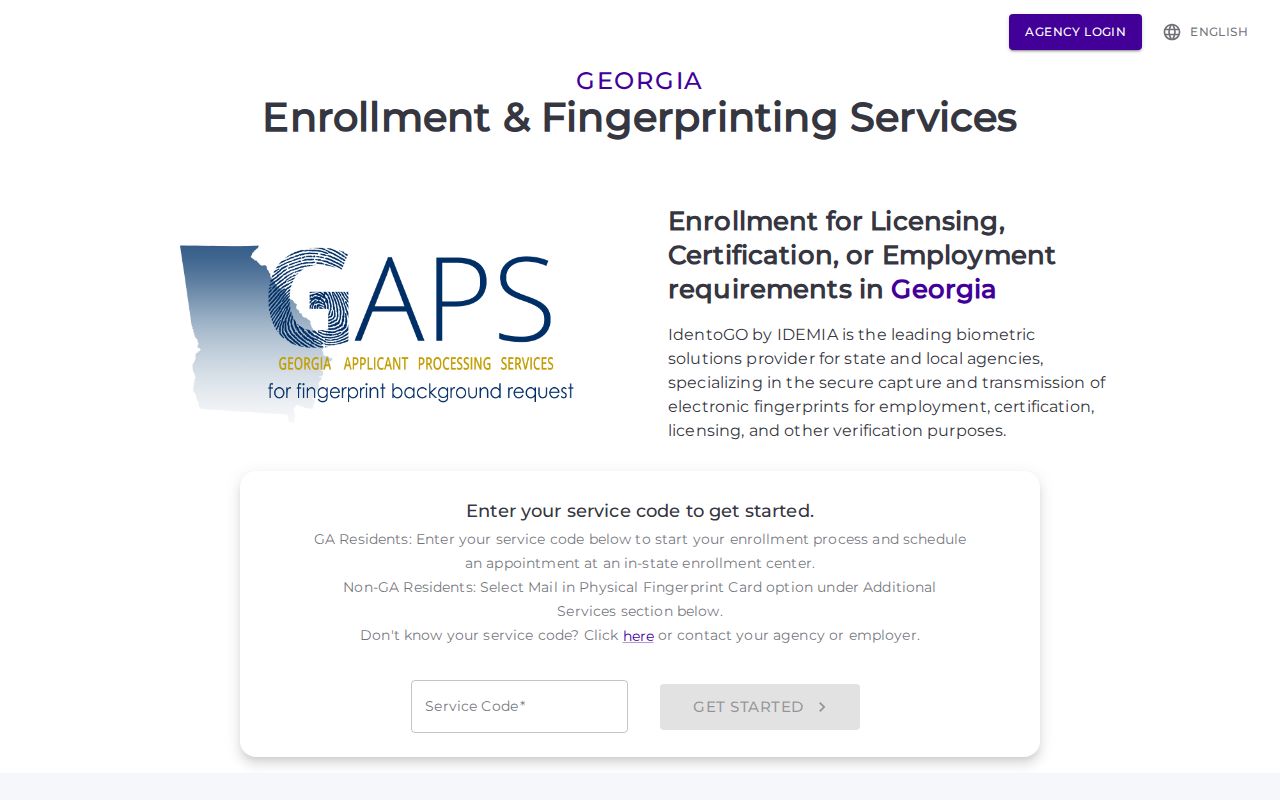
GCIC also accepts fingerprint cards for a personal record challenge. A fingerprint comparison is especially important when another person has used the same name or identifying data.
Types of Criminal Records
Each Lee County record has its own custodian and time horizon. The arresting agency creates the incident and arrest report. The jail produces the booking and confinement entry. The clerk maintains the filed criminal case. GCIC assembles reported fingerprint-supported arrest cycles and dispositions, while corrections and supervision agencies hold later custody events.
- Incident and arrest reports: describe the event, officer action and alleged offense.
- Booking records: document jail intake, charges delivered at intake, bond and release.
- Court case files: show formal charges, motions, hearings and the final ruling.
- Warrants: belong to the issuing court and may not appear in a public list.
- State records: cover reported history, prison custody, supervision or registry status within each system's scope.
Municipal records add another layer. Leesburg and Smithville keep their own ordinance and eligible traffic case files even when a related jail booking appears through the county sheriff.
Lee County Jail Status
The 109-bed Lee County Criminal Justice Center at 119 Pinewood Road creates local confinement records. Citizen Connect supports Current Confinements and admission-date searches, with an admission span of no more than 31 days. A public result may show booking or inmate number, admission and release details, charges, bond, arresting agency and a photograph. Those fields reflect custody administration, not the final court outcome.
The official confinement interface shows the current and date-based search choices.
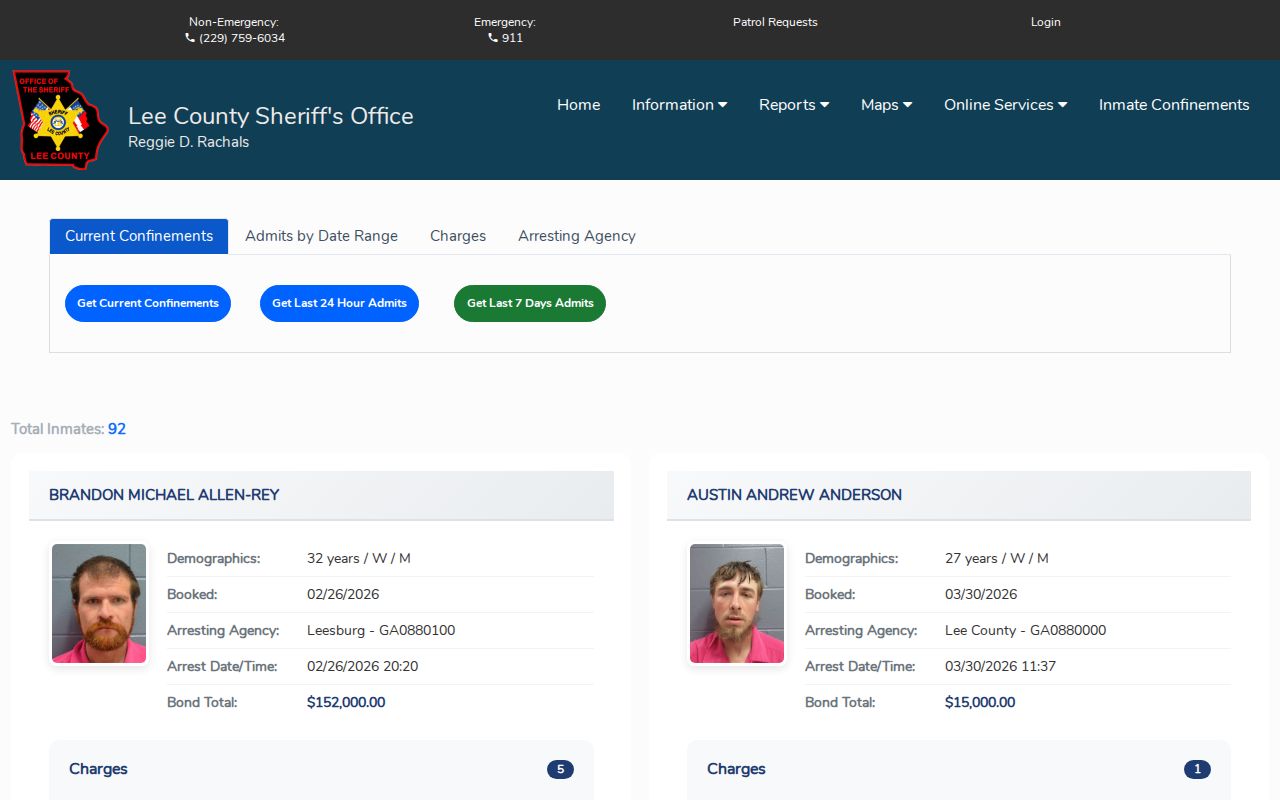
Call the jail at (229) 759-6034 when a transfer, release or same-day admission may have changed the screen. State-prison custody is a separate GDC question.
What a Lee County Criminal Record Shows
A complete review compares fields across several records. Names and dates help match entries, but charge wording may change between jail intake and prosecution. Read every count separately. A dismissal on one count does not decide another, and a docket marked closed does not by itself mean a conviction.
| Name & Identifiers | Legal name, aliases, date of birth, sex, race and fingerprint-linked SID or OTN when released. |
|---|---|
| Arrest / Booking Data | Date, arresting agency, report or booking number, charge at intake, bond and release. |
| Charges & Statutes | Offense wording, count, severity and Georgia Code citation as filed. |
| Disposition | Dismissal, nolle prosequi, plea, conviction, acquittal or another result for each count. |
| Sentence | Confinement, probation, fines, restitution and court conditions. |
| Custody / Supervision | County jail, GDC custody, DCS supervision or parole information within the relevant system. |
- Nolle prosequi
- A prosecutor's formal decision not to pursue a charge at that time; it is not an acquittal.
- Disposition
- The way each charge ended in court.
- First Offender
- A Georgia treatment that can lead to exoneration after successful discharge under the statute.
Lee County Court Record Layer
Lee Superior Court in the Southwestern Judicial Circuit handles felonies. Magistrate Court issues arrest and search warrants, conducts first appearances, considers bond and holds preliminary hearings. Municipal courts handle city ordinances and eligible traffic or fine-only matters. The Superior Court clerk at 100 Leslie Highway, P.O. Box 49, Leesburg, keeps filed criminal cases and provides plain or certified copies.
Georgia has no single free and complete statewide criminal-case database. PeachCourt connects participating Superior and State Courts, but account access and document fees may apply.

If a Lee County case does not appear, call the clerk at (229) 759-6018 with the name, arrest date and likely filing year. The certified disposition is stronger evidence of outcome than a booking row.
Public Access Laws
The Georgia Open Records Act favors access to existing agency records and requires a response within three business days. That response may provide the record, cite an exemption, give a production schedule or estimate costs. Lee County gives the first 15 minutes of qualified staff time without a labor charge, then may charge for the lowest-paid employee able to perform the work. Standard letter or legal pages cost ten cents each; other media use actual reproduction expense.
Key Georgia laws:
O.C.G.A. §§50-18-70 through 50-18-77 govern open-records access and exemptions.
O.C.G.A. §35-3-34 governs dissemination of Georgia criminal-history information.
O.C.G.A. §35-3-37 establishes record restriction procedures.
O.C.G.A. §42-1-12 governs the Georgia Sex Offender Registry.
Active investigations, juvenile material, sensitive victim information and sealed records may be withheld or redacted. Ask for segregable, nonexempt portions when only part of a record is protected.
Lee County Records Request Routing
Send the request to the custodian that holds the record. General county-government material goes to the Open Records Clerk at 102 Starksville Avenue North. Criminal and civil court files go to the Superior Court clerk. Sheriff reports, arrest records and police reports go to 119 Pinewood Road, P.O. Box 610, Leesburg, GA 31763, telephone (229) 759-3334. A request sent to another county worker may not count as filed until it reaches the designated clerk.
Describe an existing record rather than asking the office to investigate or create a list. Give a tight date range, agency, incident or case number, and specify inspection, electronic copy, plain paper or certification. Distinguish the initial report from supplemental narratives, dispatch logs, recordings, photographs and attachments because different exemptions and production work can apply.
Lee County Sheriff
119 Pinewood Road
Leesburg, GA 31763
(229) 759-3334
Superior Court Clerk
100 Leslie Highway
Leesburg, GA 31763
(229) 759-6018
Sealed, Expunged & Restricted
Georgia calls its main criminal-history remedy record restriction. Restriction limits public and noncriminal-justice access; it does not literally destroy every agency record. Court sealing, First Offender Act treatment and retroactive first-offender treatment are separate tools. Eligibility depends on the arrest date, offense and exact disposition, so age alone or completion of a sentence does not guarantee relief.
The official GCIC route passes through several offices. The applicant completes Section One of the current form and returns it to the arresting agency. That agency completes Section Two and sends it to the prosecutor. The District Attorney or solicitor decides Section Three. Approved material then reaches GCIC with its processing fee. Check the current GBI instructions before filing.
After processing, review the county portal, court access and personal GCIC record separately. If arrest facts are wrong, the originating agency must update them. A missing disposition may require a certified court record, and an identity dispute requires fingerprint comparison.
Lee County Warrant Checks
No complete public Lee County warrant-name search was confirmed. Citizen Connect's Daily Report has a Most Wanted tab, but it is not a full warrant index and its warning says not to attempt detention. For a warrant issued by Magistrate Court, contact that court. Ask Superior Court about criminal case warrants and the relevant municipal court about a missed city citation. Use the sheriff's non-emergency line for safe surrender or execution logistics.
Unserved investigative warrants, juvenile matters and sealed files may not be public. Payment should not be assumed to clear a warrant until the issuing court and sheriff both update their systems. Resolution runs through the issuing court.
Never approach or try to detain a person shown on a most-wanted list. Give information to law enforcement.
Lee County Custody After Sentencing
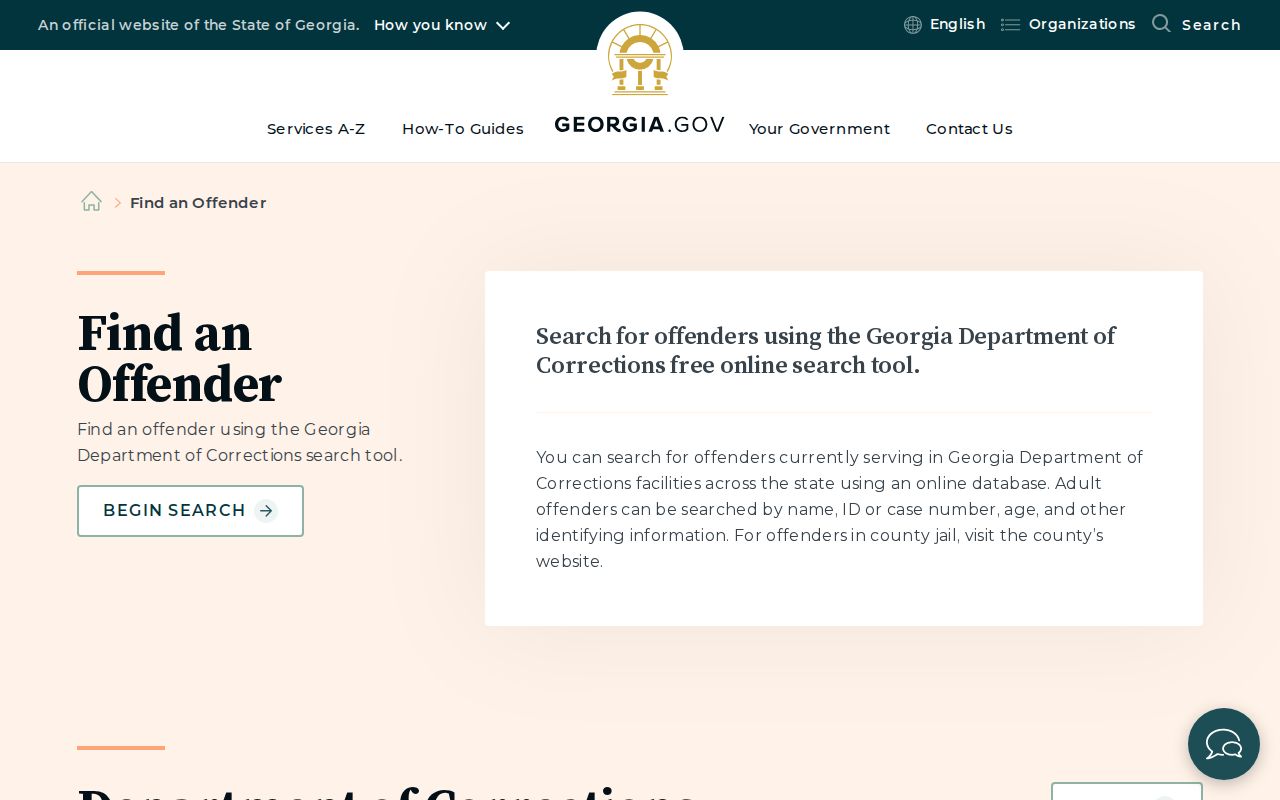
County confinement and state custody are different systems. The GDC Offender Search covers people in Georgia Department of Corrections custody or supervision. It is not a complete Lee County jail roster. Search with the GDC ID or case number when known, or use name, gender, race, age and county filters. Verify the result with the sentencing court because custody status does not replace a judgment.
The official state locator explains the correctional search channel.
Adult felony probation and parole supervision belongs to the Georgia Department of Community Supervision. The State Board of Pardons and Paroles makes parole decisions. Conditions and officer notes may remain confidential, and a violation allegation is not automatically a new conviction.
Lee County Arrest Date Searches
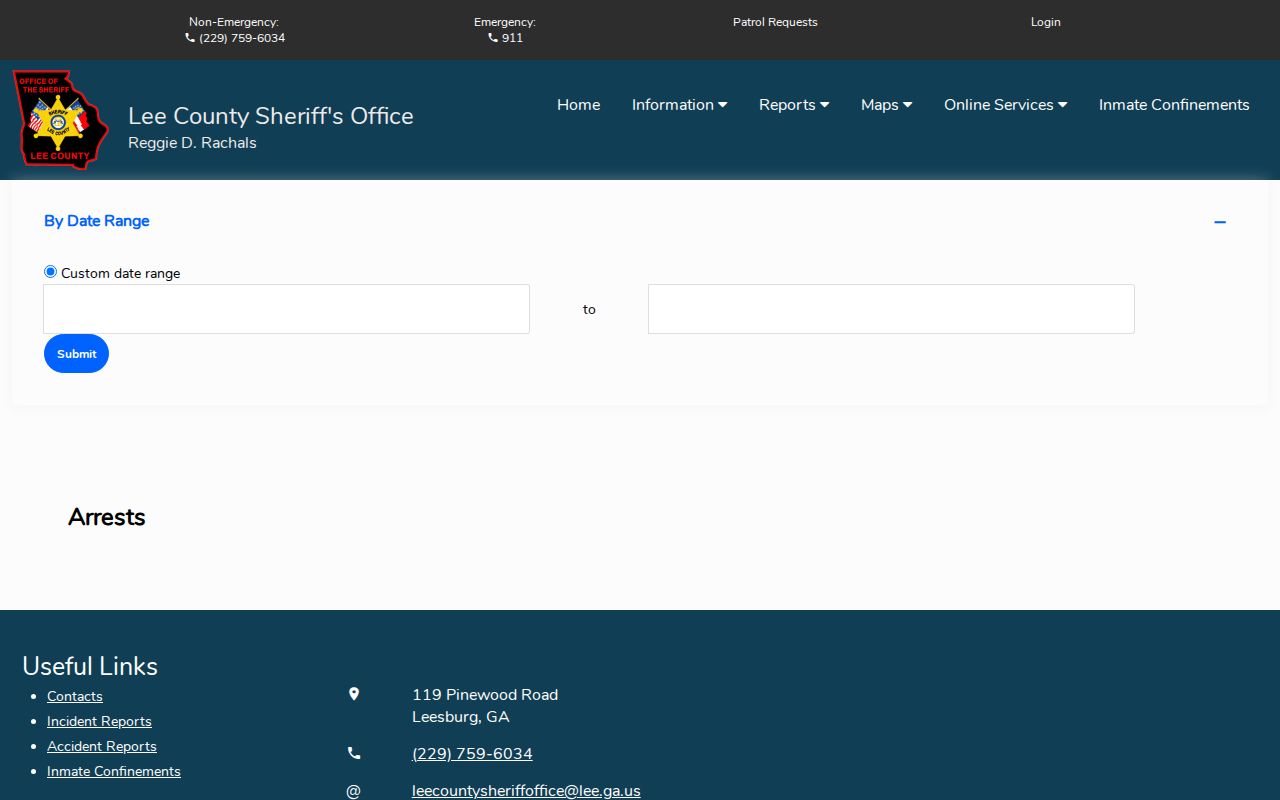
Citizen Connect's Arrest Search is designed around an arrest-date range and agency filter. It is useful when the event date is known but the booking status has changed. Search both coded and fully spelled agency values where the interface offers them, since vendor normalization can split Leesburg or Smithville police entries into more than one category.
The official arrest form displays the date-based controls without turning a private person into the subject.
Follow any arrest result to the arresting agency report and then the court. Prosecutors can change or decline charges after jail intake, so a booking label is not the final legal result.
Lee County Registry Layer
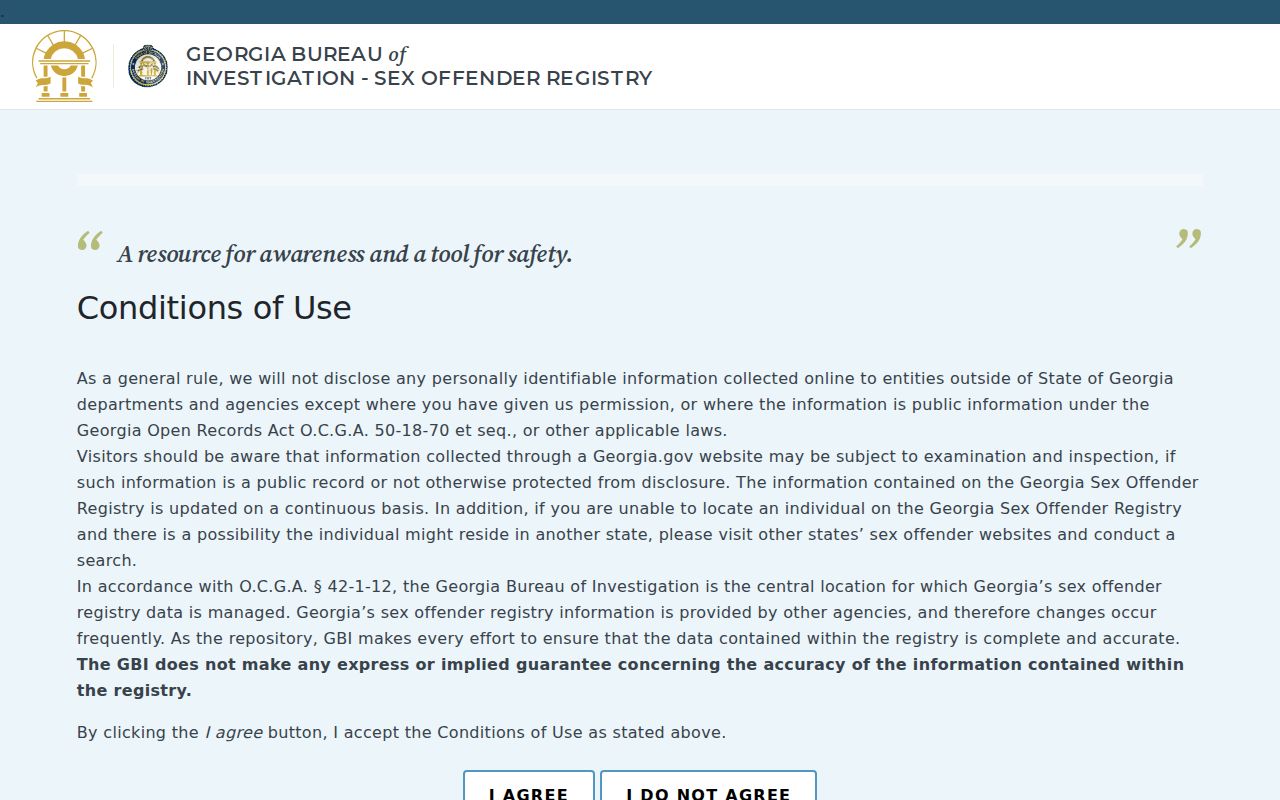
The Georgia Bureau of Investigation centrally manages the Georgia Sex Offender Registry, while sheriffs supply and verify local data. Name and geographic searches may use county, city, ZIP, address, radius and map controls. The information changes often, and the GBI does not guarantee that every entry is complete or current.
The neutral official registry screen shows how to begin a lawful search.
Use the Lee County sex offender check for the field-by-field workflow. Report suspected noncompliance to the sheriff at the Criminal Justice Center. Do not confront, threaten or harass anyone listed.
Criminal Records by City in Lee County
Lee County has two incorporated cities. Their police departments create city incident records, and their municipal courts keep ordinance and eligible traffic case files. A city arrest can still produce a county jail entry, while a felony filing moves to Lee Superior Court. Start with the city that created the event, then follow the record to the county or state layer only when the case moves there.
Leesburg Criminal History
County seat with distinct city police, municipal court, county jail and Superior Court custodians.
Smithville Criminal History
Police and Municipal Court use phone and counter access, with county systems for jail and felony records.